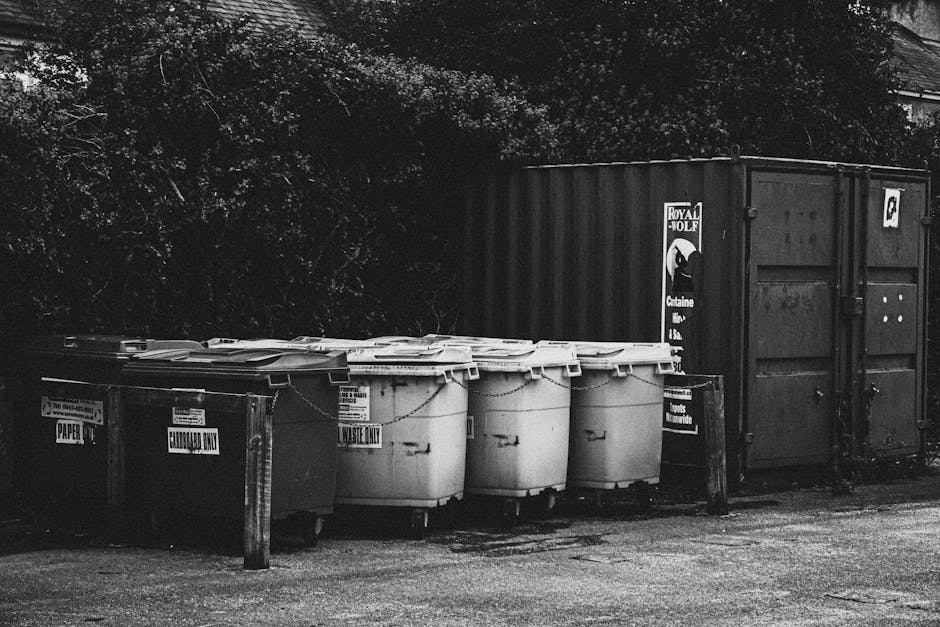
Common access problems for Bracknell Forest bulky waste collection: what they are and how to handle them
If you are trying to arrange a bulky waste collection in Bracknell Forest and the front path is tight, the driveway is awkward, or the item is simply too large to move safely, you are not alone. Common access problems for Bracknell Forest bulky waste collection are one of the main reasons jobs get delayed, quoted incorrectly, or refused on the day. The good news? Most access issues can be solved with a bit of planning and a realistic look at the route from the item to the vehicle.
This guide breaks down the most common access barriers, why they matter, how collections usually work, and what you can do to make the process smoother. It is written for homeowners, landlords, tenants, and businesses who want the job done safely, without last-minute chaos. And let's face it, nobody wants to be dragging a wardrobe through a narrow hallway at 8.00 on a wet Tuesday morning.
Why Common access problems for Bracknell Forest bulky waste collection Matters
Access is not a minor detail. It is often the difference between a clean, efficient collection and a frustrating delay. In bulky waste work, the item itself is only half the story. The real question is: can it actually be reached, moved, lifted, and taken away without damaging the property or putting anyone at risk?
In Bracknell Forest, that can mean anything from a terraced home with a narrow side passage to a first-floor flat with awkward communal stairs, a shared driveway blocked by parked cars, or a garden item tucked behind locked fencing. Even something as ordinary as an old sofa can become awkward if it has to be turned twice in a tight hall. Truth be told, most access problems are not dramatic. They are just inconvenient enough to cause trouble.
Why does this matter so much?
- Time: a collection team may need longer if access is tight, or they may need to reschedule if they cannot complete the job safely.
- Cost: additional labour, extra handling, or a second visit can affect the quote.
- Safety: difficult routes increase the chance of bumps, scrapes, trips, and back strain.
- Property protection: narrow doorways and low ceilings make wall damage and floor scuffs more likely.
- Waste segregation: if items are hard to reach, recycling or separation can be less efficient.
This is also where expectations matter. Some customers think a collection means the crew will just "make it work" no matter what. Sometimes they can, sometimes they cannot. A practical, honest assessment up front is far better than discovering the issue when the van is already outside.
For anyone comparing household or business clearances, it can help to understand how broader services work too. Pages such as house clearance, home clearance, and waste removal show the wider range of jobs where access planning is just as important.
How Common access problems for Bracknell Forest bulky waste collection Works
A bulky waste collection usually starts with a description of what needs removing, where it is located, and how easy it is to reach. That sounds simple, but the access part can change everything. A collection that looks straightforward on paper may turn out to involve stairs, long carries, tight corners, or restricted parking.
Most access assessments look at a few practical points:
- Item size and weight: a large chest freezer, wardrobe, or heavy bed base needs different handling from a lighter chair or table.
- Route from item to vehicle: are there stairs, narrow doors, low beams, or slippery steps?
- Parking access: can the vehicle get near the property, or will the team need to carry items a long distance?
- Ground conditions: muddy gardens, gravel, steep paths, and wet surfaces all slow things down.
- Shared or restricted access: flats, communal entrances, and locked gates often require extra coordination.
- Disassembly needs: some items need to be broken down before they can leave the building.
There is a simple rule here: the more unknowns, the more likely the collection needs a pre-check or a more detailed quote. A good provider will ask questions before arrival, not after. That is not fussiness. It is basic planning.
If the access route is manageable, a team may remove items directly. If it is not, they might suggest partial dismantling, more labour, or a different collection time. For larger clearances, especially those involving furniture or mixed waste, pages like furniture clearance, furniture disposal, and garage clearance can be useful context because they often involve tight access in the real world.
Key Benefits and Practical Advantages
It may sound obvious, but clearing access before collection day saves a lot of grief. You can think of it as paying a little attention now to avoid a lot of noise later. That is not glamorous, but it works.
Some of the main benefits include:
- Fewer delays: crews can start work immediately instead of waiting while paths are cleared.
- Better pricing accuracy: accurate access details help avoid surprise charges or revised quotes.
- Less property damage: clear routes reduce the chance of wall marks, chipped paint, or broken fixtures.
- Safer lifting: when the route is planned, heavy items can be moved with better technique.
- More efficient recycling: quicker sorting and loading can support better waste handling.
- Less stress for you: the job feels calmer when everyone knows what to expect.
There is also a practical benefit that people forget: confidence. When you have checked the route, measured the doorway, and moved the car, you are far less likely to be standing at the window wondering if the collection team is going to get stuck halfway down the stairs. That small sense of control matters more than it sounds.
Expert summary: most access problems are solvable if they are identified early. The best collections are rarely the ones with the strongest lifting crew; they are the ones where the access route was thought through before anyone arrived.
If you are arranging collections alongside a wider property clear-out, you may also find value in pages such as flat clearance, loft clearance, and office clearance. Those jobs tend to reveal access problems early, especially in buildings with shared corridors or awkward storage spaces.
Who This Is For and When It Makes Sense
Access planning matters for anyone booking bulky waste removal, but it is especially useful in a few common situations.
- Homeowners: if you are clearing old furniture, appliances, or garden waste from a house with narrow access points.
- Tenants: if you need to remove items quickly before moving out and do not want a last-minute issue at the door.
- Landlords and letting agents: if you are dealing with end-of-tenancy rubbish, abandoned furniture, or a property that has been left in a hurry.
- Flat residents: if the lift is small, the stairs are tight, or there are communal rules about parking and access.
- Businesses: if you are disposing of office items, stockroom waste, or old fixtures from a building with loading restrictions.
- Renovators and builders: if you are moving out builders' waste and the route is partly blocked by materials or scaffolding.
The service also makes sense when you already know access will be the main headache. A wardrobe upstairs is one thing. A wardrobe upstairs, behind a low landing ceiling, with a banister in the way? Different story entirely.
If that sounds familiar, you may want to compare it with other clearance options such as builders' waste clearance or business waste removal, where access constraints can be just as important as volume.
Step-by-Step Guidance
Here is the simplest way to handle access issues before a bulky waste collection. Nothing fancy. Just a practical sequence that tends to work.
- Walk the route from the item to the vehicle. Start at the item itself and trace the exact route to the exit. Watch for corners, tight halls, low ceilings, and any step that could catch a wheel or toe.
- Measure where it matters. Door width, stair width, turning space, and height clearances are the big ones. A rough guess is often not enough.
- Check parking access. Can a van stop close enough? Are there restrictions, permits, or shared driveway concerns? Even a few extra metres can change the job.
- Clear the route completely. Move shoes, plant pots, bikes, recycling bins, child gates, and anything else that could snag a carry.
- Look for hidden risks. Wet moss on steps, loose paving, broken handrails, low lighting, and soft ground in the garden can all cause trouble.
- Tell the provider the awkward bits. Do not downplay the issue. If the item only fits at an angle, say so. If the lift is broken, say that too.
- Prepare the item if needed. Remove drawers, shelves, loose doors, or detachable legs before the team arrives, if it is safe to do so.
- Keep the access point free on the day. A clear path right up to arrival time makes a real difference, especially if neighbours or family members tend to park in the "wrong" spot.
For many households, this is enough. For more complex jobs, a little extra prep helps: label what is going, separate recyclable materials where possible, and decide in advance whether anything needs to stay.
If you are unsure how much is involved, using a pricing page such as pricing and quotes can help frame what information you will need to provide before booking.
Expert Tips for Better Results
After a while, you notice the same issues repeating. The good news is that the fixes are usually simple. Here are a few tips that make collections run more smoothly in the real world.
1. Photograph the access route
A couple of clear photos can explain more than a paragraph of description. Snap the front path, the stairs, the doorway, the parking spot, and the item itself. If there is a tight bend or a narrow gate, include that too. It saves everyone from guesswork.
2. Mention the awkward detail, even if it feels small
That little lip on the threshold? The gate that only opens halfway? The lift that is technically working but barely big enough for a vacuum cleaner? Mention it. Small obstacles often create the biggest headaches. Strange, but true.
3. Clear access the night before if you can
In many homes, the route is clear at breakfast and blocked by lunch. Bikes appear. Bins wander. Shoes multiply by the door like rabbits. If possible, do your clearing the evening before while the path is still calm.
4. Think about the reverse route as well
People usually focus on how an item will leave the property. Less often, they consider where the crew will bring it from if they need to turn around, stage it, or temporarily place it outside. Space outside matters too.
5. Be realistic about disassembly
Some items can be taken apart quickly. Others cannot without tools, time, or a lot of patience. If the item is integrated, heavy, or old and swollen with damp, plan for a harder job.
That said, not every collection needs over-planning. For straightforward items, overcomplicating it can be just as annoying as under-preparing. There is a balance here, and you get a feel for it after one or two jobs.
Common Mistakes to Avoid
Most access problems are avoidable, but the same mistakes come up again and again.
- Assuming "it should fit" is good enough. Should is not the same as will.
- Forgetting about turns and angles. An item may fit through a doorway but not around the corridor bend.
- Ignoring parking distance. If the vehicle cannot get close, the carry becomes longer and slower.
- Leaving stairs cluttered. A few boxes on the landing can create a serious trip hazard.
- Not checking lift dimensions. A lift can seem large until you try to move a sofa into it.
- Hiding the awkward detail. If there is a security gate, locked rear access, or no resident parking, say so early.
- Booking before knowing what needs dismantling. Sometimes the item is not the problem; the route is.
One particularly common issue is forgetting about shared access in flats. A hallway that looks fine in a normal day can become impossible once a neighbour's buggy, a parcel trolley, and two bin bags are all in the way. It happens.
If you are dealing with larger household items, you may also want to look at furniture disposal and furniture clearance, because these jobs often reveal just how tricky access can be with bulky pieces.
Tools, Resources and Recommendations
You do not need specialist kit to prepare for most collections, but a few simple tools help a lot.
- Measuring tape: useful for doorways, corridors, and stair width.
- Phone camera: ideal for sharing photos of the route and the item.
- Masking tape or chalk: handy if you want to mark a turning point or measure a tight gap visually.
- Flashlight: useful for dark lofts, side passages, garages, and rear gardens.
- Gloves and sturdy shoes: worth wearing if you are moving anything yourself.
For property owners, a simple note on the fridge or in the hallway can help everyone remember what is happening on collection day. It sounds a bit basic, but basic is often what works. In our experience, the quiet jobs run best when everybody knows where the bikes, bins, and loose odds and ends have been moved to.
There are also a few company pages worth knowing when you are checking trust and service standards. health and safety policy, insurance and safety, recycling and sustainability, and about us can help you understand how a provider approaches safety, responsibility, and customer care.
If you need help with a specific arrangement, contact the team directly to discuss the access route before collection day.
Law, Compliance, Standards, or Best Practice
Access issues are not just a convenience problem. They can touch on safety, property responsibility, and waste handling best practice. Without overcomplicating things, there are a few common-sense standards that matter.
First, waste should be handled in a way that protects people and property. That means no forcing items through a space where they clearly do not fit, no unsafe lifting, and no creating a hazard in communal areas. If a team decides a route is not safe, that is usually a sensible call, not a bad one.
Second, in shared buildings or business settings, access may involve consent, parking restrictions, or building rules. These are practical issues more than legal theory. A collection team may need advance notice for concierge access, loading bay use, or timed entry. It is better to check than to assume.
Third, if items are being removed as waste, they should be sorted and dealt with responsibly. Good practice normally includes separating recyclable material where feasible and avoiding unnecessary contamination. If you care about that side of things, the page on recycling and sustainability is a useful reference point.
Finally, if a provider has clear terms, complaints information, and payment guidance, that is usually a positive sign. It shows the business is set up to deal with real-world issues rather than pretend every job is identical. You can review terms and conditions, complaints procedure, and payment and security for a better sense of how the service is structured.
Options, Methods, or Comparison Table
Not every access issue needs the same solution. Sometimes you can solve it with a little prep. Sometimes you need more labour or a different approach. Here is a practical comparison.
| Approach | Best for | Pros | Limitations |
|---|---|---|---|
| Self-prep before collection | Simple access issues, clear pathways, light items | Fast, low stress, helps keep costs down | Only works if the route is genuinely manageable |
| Partial dismantling | Large furniture, wardrobes, beds, desks | Makes tight turns and narrow doors easier | May take time and tools; not suitable for every item |
| Extra labour on the day | Heavier items, awkward stair carries, longer walks | Can solve more complex jobs | May affect price and timing |
| Rescheduling after access changes | Blocked driveways, missing keys, unsuitable weather or conditions | Protects safety and avoids rushed work | Less convenient if you needed same-day removal |
For many people, the first option is enough. For flats, older properties, or mixed household clearances, the second and third options are more realistic. And to be fair, that is not a failure. It is just the nature of bulky waste work.
Case Study or Real-World Example
A typical example: a Bracknell Forest household needs an old three-seat sofa, a broken wardrobe, and several bagged items removed from the upstairs landing. On paper, it sounds straightforward. But the landing is narrow, the turn at the top of the stairs is tight, and the front path has parked cars on one side and a wheelie bin on the other.
What made the difference was not brute force. It was preparation.
The customer measured the hallway and sent a few photos the day before. The wardrobe doors were removed. The path was cleared. A neighbour was asked to leave the driveway free for an hour. When the crew arrived, the job still took care and patience, but it ran smoothly. No panic, no awkward improvising, no damage to the paintwork. A simple collection, basically, but one that would have been much harder without those small steps.
That is the pattern you see over and over. A bit of honesty about access saves a lot of hassle. Not glamorous, but very effective.
Practical Checklist
Use this checklist before your bulky waste collection day.
- Have I walked the full route from the item to the vehicle?
- Are doorways, stairs, and turns measured or at least checked carefully?
- Is the parking space clear and realistic for a loading vehicle?
- Have I told the provider about gates, lifts, locks, or shared entrances?
- Have I removed loose parts or reduced the item where possible?
- Is the path free of bins, bikes, rugs, shoes, and other trip hazards?
- Are there wet, muddy, icy, or uneven surfaces to think about?
- Have I shared any access photos if the job is awkward?
- Do I know whether anything needs prior approval in a flat or business building?
- Have I checked the provider's safety, payment, and terms information?
If you can tick most of those off, you are in a very good position. If not, no drama. Fix what you can, say what you cannot, and build from there.
Conclusion
Common access problems for Bracknell Forest bulky waste collection are usually less about the waste itself and more about the route, the space, and the little details that get overlooked. A narrow doorway, a blocked driveway, a tight stair turn, or a locked communal gate can turn an easy job into a slow one very quickly.
The best approach is simple: look at access early, be honest about the tricky parts, and prepare the property before the crew arrives. That gives you a smoother collection, a safer job, and far less chance of awkward surprises on the day. It also helps the team work in a more orderly way, which usually means better results all round.
And if you are still unsure whether your property is suitable, ask before booking. A short conversation now is a lot easier than a stressful carry later.
Get a free quote today and see how much you can save.
Frequently Asked Questions
What are the most common access problems for bulky waste collection?
The most common issues are narrow doorways, tight staircases, blocked driveways, long carries from the road, shared entrances, and items that need disassembly before they can be moved safely.
Can bulky waste still be collected if my driveway is blocked?
Sometimes yes, but it depends on how far the vehicle would need to carry the waste and whether that route is safe. If access is blocked on the day, the provider may need to reschedule or adjust the plan.
Do I need to measure my doorway before booking?
It is strongly recommended, especially for sofas, wardrobes, beds, white goods, or office furniture. Even a quick measurement can prevent a lot of guesswork and avoid a failed collection.
What should I do if the item only fits at an angle?
Tell the provider in advance and take photos if possible. Items that need awkward angles often require extra handling, and that can affect timing and pricing.
Is access harder for flats than houses?
Often yes, mainly because of communal stairs, lifts, parking restrictions, and building rules. That said, some houses can be just as tricky if the path or rear access is narrow.
Will I be charged more if access is difficult?
Possibly. Extra labour, longer carry distances, or the need to dismantle items can affect the quote. The safest approach is to share all access details early so the estimate is realistic.
What happens if the team cannot get to the item safely?
If the route is unsafe or the item cannot be moved without risk, the collection may not be completed until access is improved. That is frustrating, but it is usually the right call.
Should I dismantle furniture before collection?
Only if it is safe and practical to do so. Removing legs, drawers, or loose parts can help, but do not force anything or make the item unstable.
Can I leave items in the garden for collection?
You can if the route is clear and the team can access the garden safely. Wet ground, locked gates, steep steps, or narrow side passages can still create problems, so mention those in advance.
How far in advance should I mention access problems?
As early as possible, ideally when requesting a quote. Early notice gives the provider time to plan the right vehicle, labour, and timing for the job.
What if I am not sure whether my access is a problem?
If in doubt, describe it and send photos. A quick review by someone used to bulky waste collections will usually reveal whether it is straightforward or likely to need extra planning.
Are access issues relevant for garden or garage clearances too?
Absolutely. Garden and garage clearances often involve uneven ground, side access, steps, or items stored deep inside the property. Those jobs can be more awkward than they first appear.